Designing a trust-first e-commerce experience for high-value
Client
Carena
Industry
Marketplace
Role
UX/UI Designer
Duration
2 months
Context
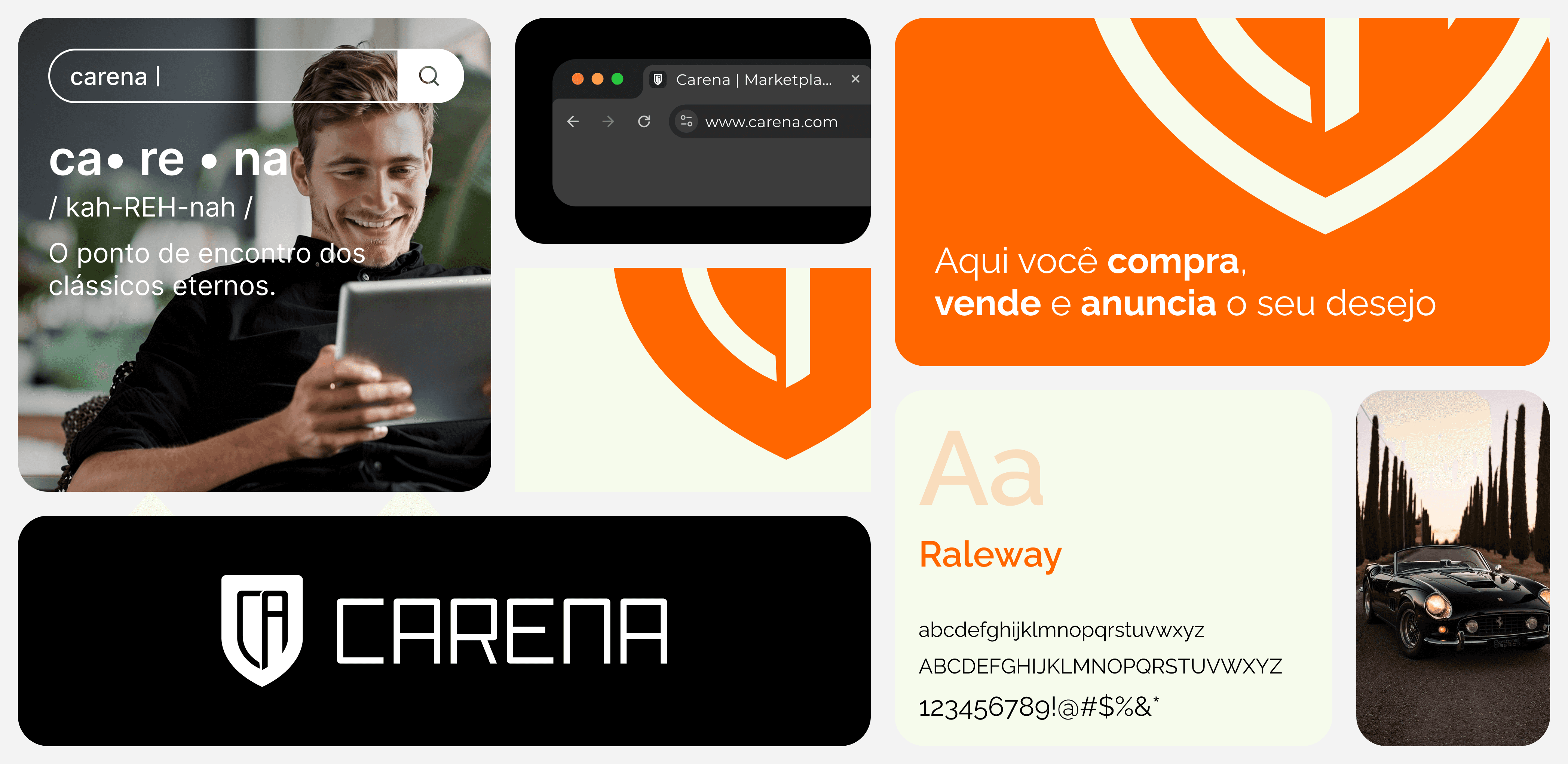
Carena is an MVP marketplace created to make buying and selling classic and special vehicles significantly safer and more transparent.
The product was built around a simple premise: high-value automotive transactions require more than listings, they require structured information, expert validation, and a strong sense of credibility throughout the journey.
Rather than reinventing the marketplace model, Carena combines:
Structured, inspection-driven vehicle data
A proprietary evaluation framework
Familiar UX patterns from the automotive market
The ambition was not disruption for its own sake, but the systematic reduction of perceived risk.
The Challenge
Buying a classic car online is fundamentally different from buying a regular vehicle, it is a high-involvement, high-risk and highly emotional decision.
While the founders were already operating in this niche, existing platforms (such as Webmotors) failed to properly support this market. Through early stakeholder interviews and research, three critical problems emerged:
Search and filtering were not adapted to classic or special vehicles.
Vehicle condition information lacked depth and credibility, increasing perceived risk.
The buying and selling experience did not generate trust, especially for high-value transactions.
The challenge was to design an MVP that could validate market fit while addressing trust, clarity, and efficiency, without overengineering the product.


The Solution
Carena was conceived as a trust-first marketplace, built on two core product principles:
Radical transparency: clear, structured, and verifiable vehicle information.
Familiarity over novelty: reducing cognitive load by leveraging known patterns from the automotive market.
The MVP focused on a small but powerful feature set:
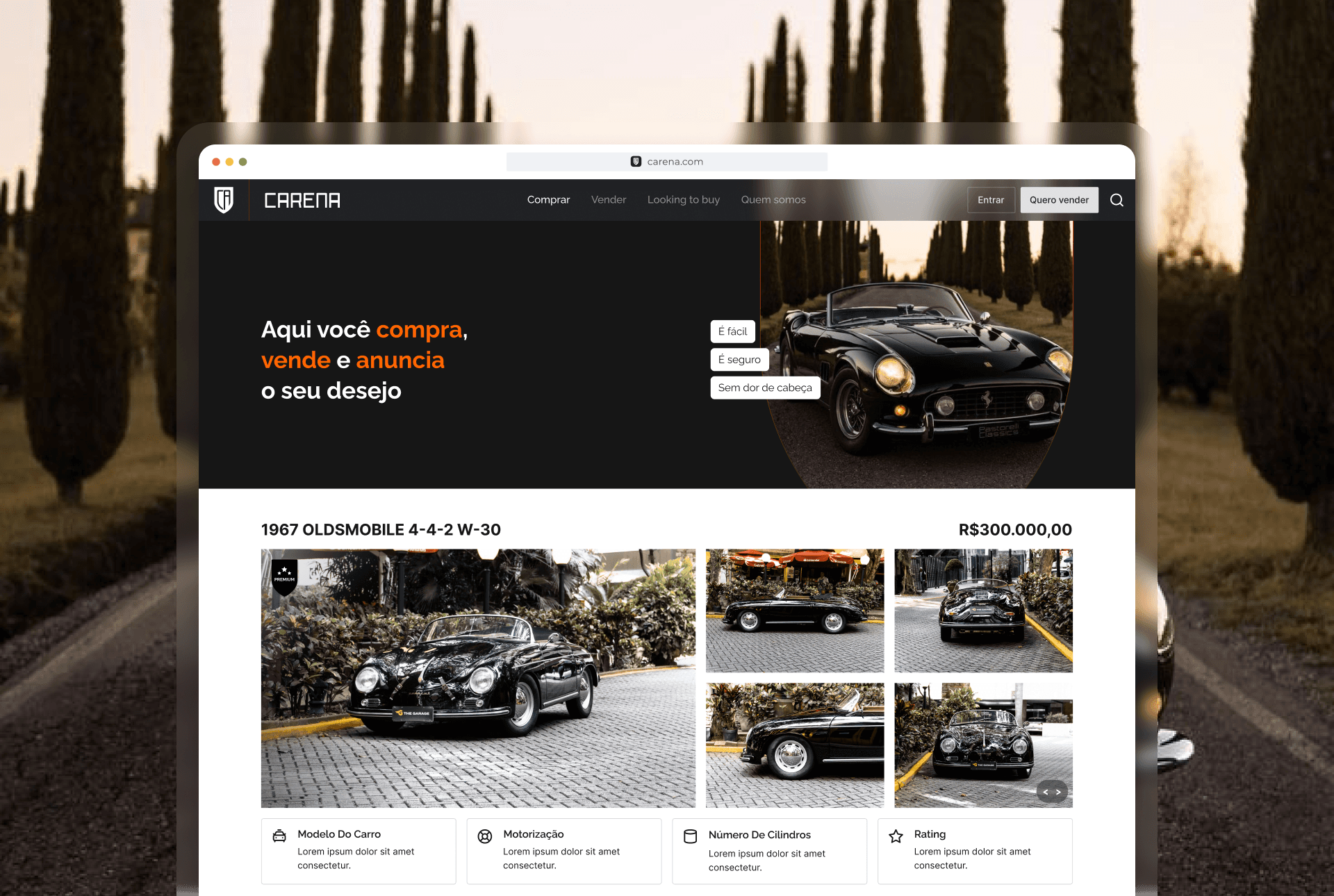
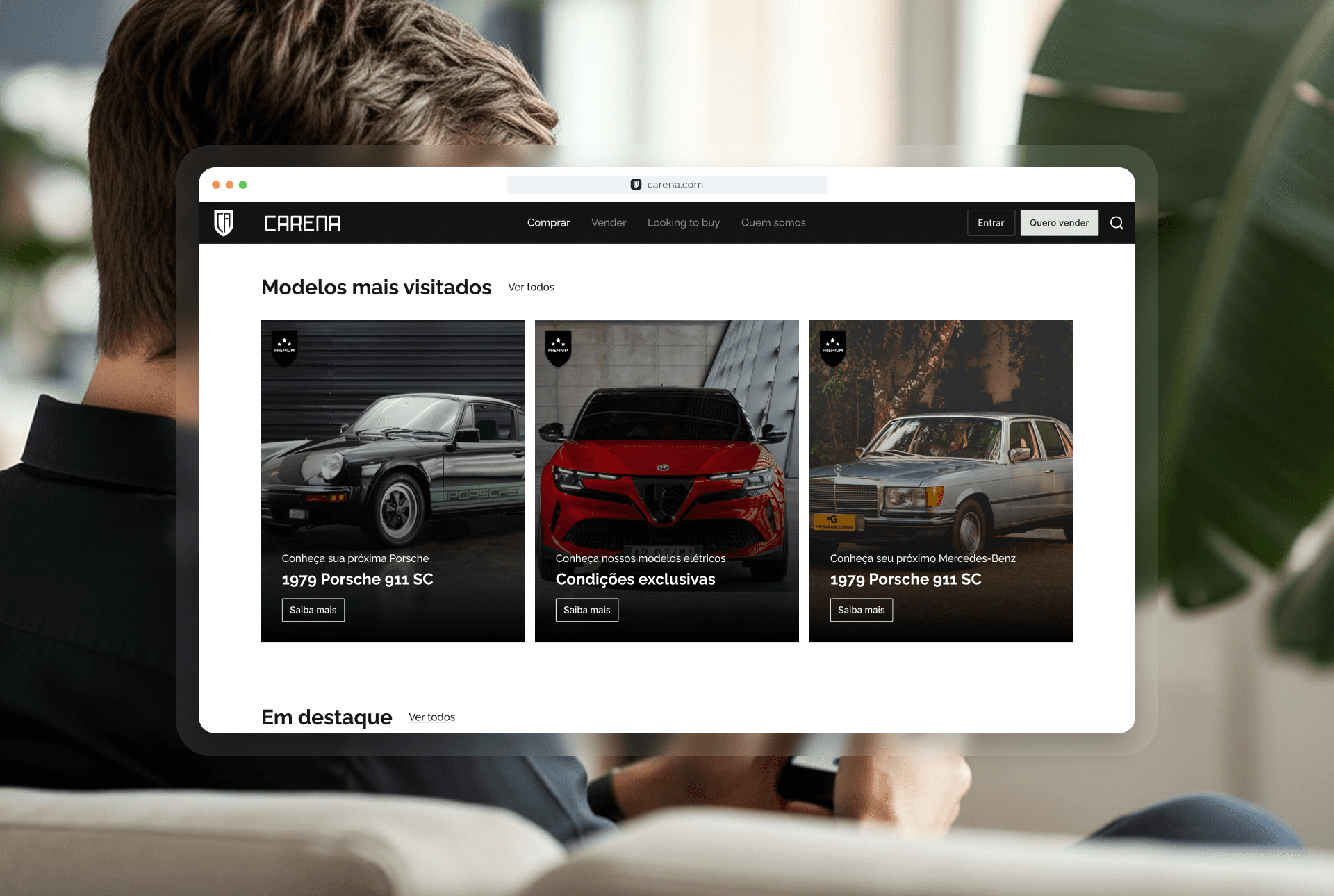
A visually strong homepage highlighting curated listings.
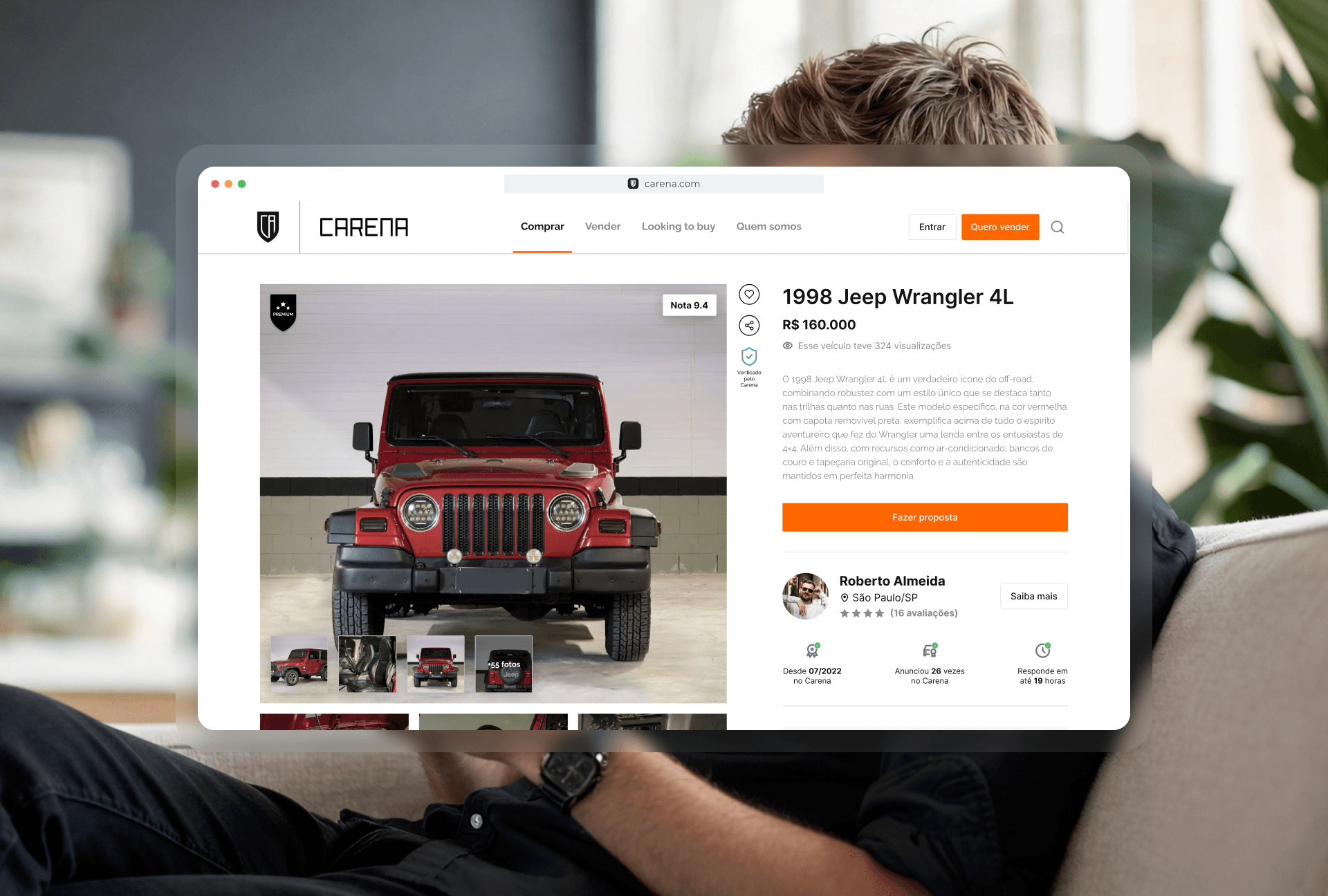
A detailed VIP listing page acting as the core decision-making surface.
A proprietary Carena Scoring System to translate technical inspections into readable insights.
Clear institutional pages reinforcing credibility and process clarity.
Rather than trying to “disrupt” behavior, the product was designed to lower friction and perceived risk at every step.
The Process
Stage 1 — Research & Discovery
Market Benchmarking
I analyzed both national and international platforms, including general automotive marketplaces and classic car auction models such as:
Cars & Bids
AutoHunter
Kavak
Instacar
The benchmark revealed a clear structural gap in Brazil:
Limited inspection-driven information
UX patterns not tailored to collectors
Heavy reliance on free-text descriptions
Most platforms treated classic vehicles as inventory. Collectors treated them as assets.
Field Research
To validate assumptions early, I conducted:
In-person exploratory interviews at a classic car event hosted by Mercedes-Benz
Five semi-structured interviews with enthusiasts recruited from Facebook communities
These conversations reinforced a critical insight: For this audience, trust and information quality consistently outweighed speed, price comparison, or deal urgency.
The purchase decision was not transactional. It was reputational and emotional.
Stage 2 — Definition
Target Audience
Men aged 30–60
Experienced classic car enthusiasts
Technically knowledgeable and detail-oriented
Emotionally attached to vehicles
Risk-averse in online negotiations
Core Problems to Solve
Insufficient, inconsistent, or unreliable vehicle information
Generic UX not adapted to collector behavior
Low confidence in remote negotiation
MVP Scope Definition
Based on synthesis, we defined a focused scope:
Curated homepage for controlled discovery
Logged-in area for buyers and sellers
Deep, information-rich VIP listing pages
Structured evaluation and scoring system
Institutional content reinforcing Carena’s values and processes
The priority was clarity over feature breadth.
Stage 3 — UX Ideation & Information Architecture
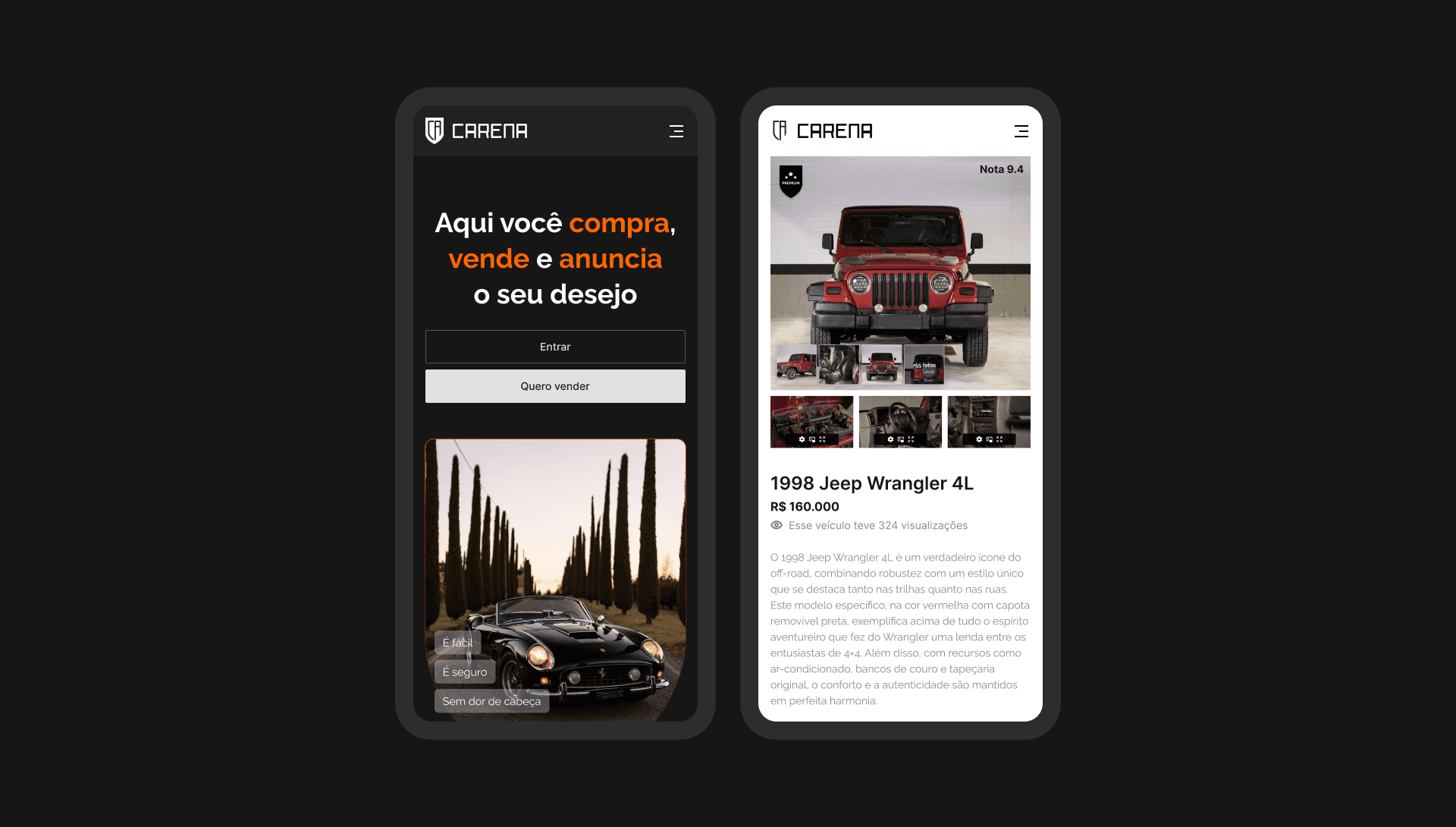
The information architecture was intentionally designed to prioritize scanning behavior over deep reading, allowing users to process complex information quickly and confidently.
Key Design Decisions
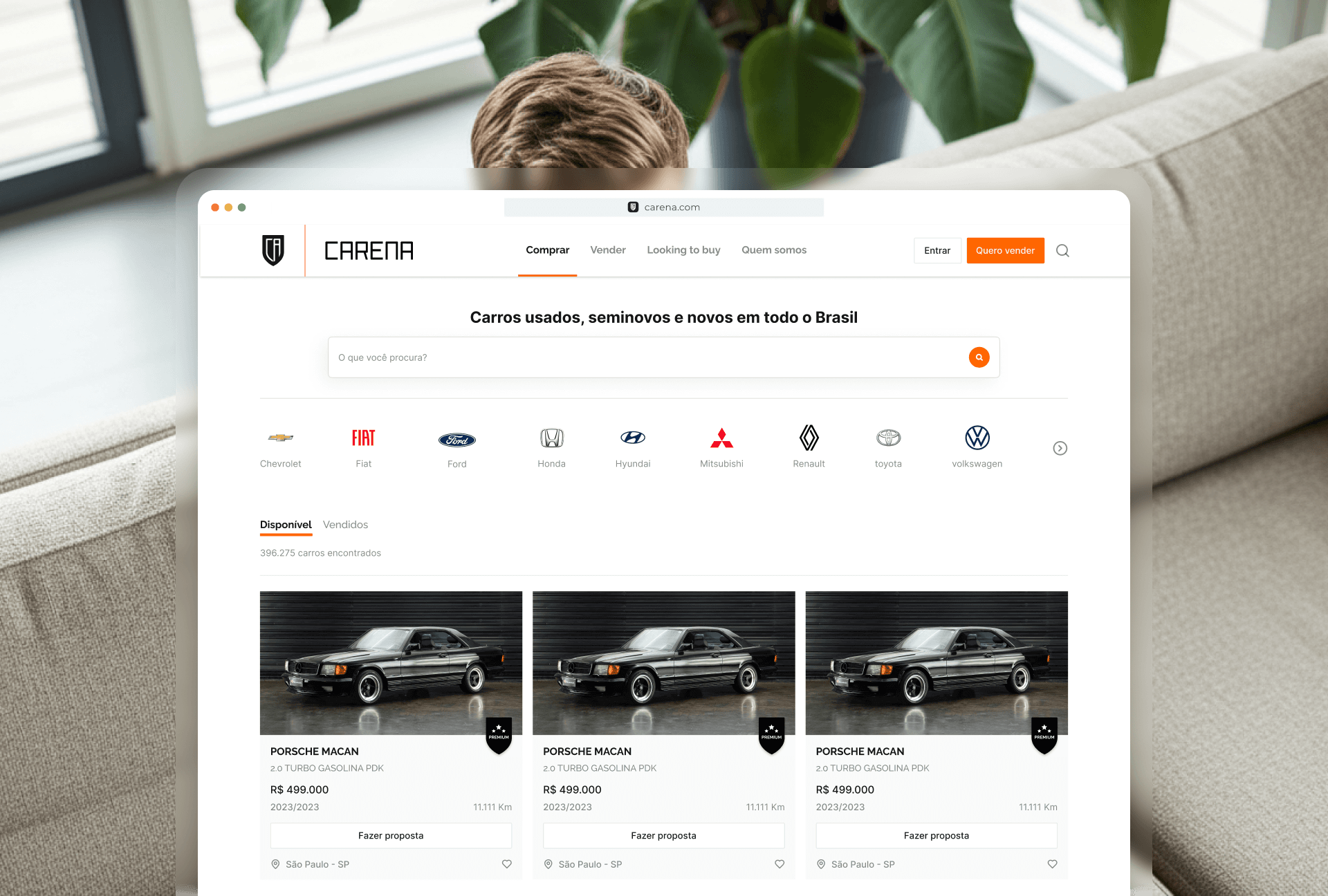
Familiar layout patterns inspired by Webmotors to reduce interaction friction
Clear distinction between Simple and Premium listings
Progressive disclosure of technical data to avoid overwhelming users
Core Experience Areas
Logged Area: Listings management, Wishlist (buying intent signaling) and Centralized negotiation hub.
Homepage: Price and Carena Score visibility, Premium badge signaling and Trust-oriented keywords such as “Safe” and “Easy”.
VIP Listing Pages: Structured technical data, Inspection results and Qualitative condition insights.
Institutional Pages: How it works, Policies + procedures and Trust reinforcement.
The VIP Page — The Heart of the Product
The VIP page functioned as the primary decision-making surface within the ecosystem. Its strategic goal was to convert technical complexity into structured confidence.
Core Design Strategies
Learning Curve Reduction
The layout leveraged familiar visual patterns from existing marketplaces and technical inspection reports, allowing users to orient themselves immediately.Scan-First Structure
Icons, tables, side navigation, and clearly segmented categories enabled rapid comparison without forcing linear reading.Embedded Trust Signals
Scores, inspection indicators, and risk highlights were placed prominently to support informed decision-making.
Carena Scoring System
Inspired by familiar Brazilian platforms such as Buscapé and Reclame Aqui, the Carena Score translates complex inspection data into an accessible evaluation framework.
System Structure
Three primary categories: Aesthetics, Mechanics, General Components
Numerical scores from 0–10
Color-coded indicators (green, yellow, red)
Expandable sub-items with contextual explanations
Visual progress bars to support quick comparisons
This system reduced ambiguity, aligned buyer and seller expectations, and created a shared language for negotiation.
Outcomes
The MVP successfully:
Validated interest in a trust-first marketplace model
Differentiated Carena from generic automotive platforms
Elevated perceived professionalism and credibility
Structured complex evaluation into comparable insights
Reduced perceived risk in high-value transactions
Rather than disrupting behavior, Carena introduced clarity into a fragmented market, positioning itself as a structured intermediary of trust.